Newsletter

Check out all of our collections!
Poultices for Horses: What They Do and When to Use Them
Learn what a horse poultice is, when to use it, and why bentonite clay works best to reduce swelling in horse's legs and help prevent and heal injuries.
You know how stiff and sore you can feel after spending hours in the saddle. Your horse feels it too—especially after a tough trail ride, training session, or long haul.
You want your horse to feel and perform their best, bounce back quickly, and be ready for tomorrow’s ride. That’s where an equine poultice comes in! It’s a simple and natural barn staple for supporting healing and recovery.
Ask the Experts: Horse Poultices Made Simple
We’ve tapped into Redmond’s own expertise with clay—as well as insights from a certified equine massage therapist and a former jockey—to answer your top poultice questions. Let’s break down the basics of what they do and when and how to use them.
Q. What is a horse poultice?
A poultice is a smooth, spreadable paste made from natural clay and water. The clay does the heavy lifting, while water activates its healing properties. Some poultices include extra ingredients, like mineral salt or essential oils, to boost benefits.
Poultices are applied directly to a horse’s skin or packed into hooves to help relieve swelling and soreness. They’re also used to protect and draw infection from wounds or abscesses.
While poultices may be new to you or your horse, they’re actually an age-old remedy! People have used them for thousands of years to care for both themselves and their animals.
Q. What is the best poultice for horses?
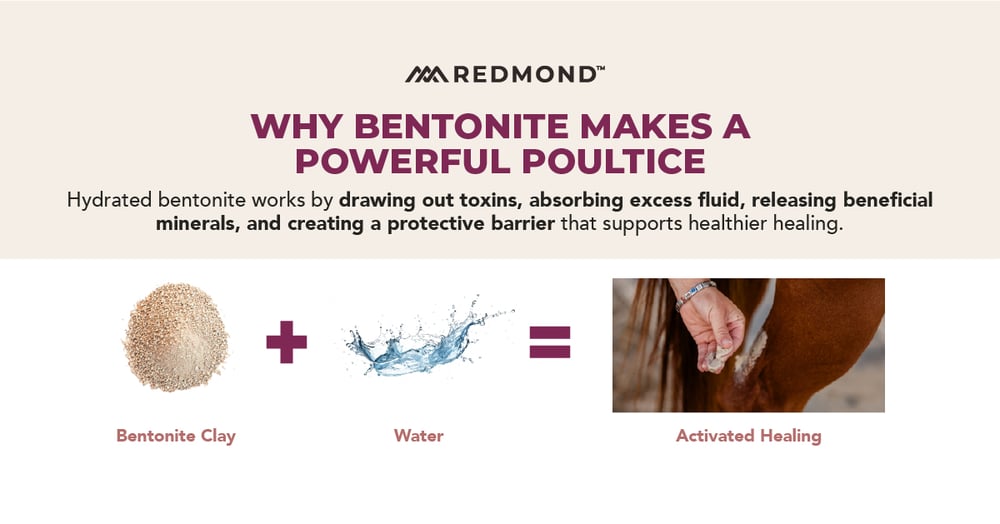
If you’re taking the time to poultice your horse, you want it to work. That means picking the right ingredients. Look for a natural product with a base of clay, like bentonite or kaolin. Bentonite, in particular, has powerful absorbing and adsorbing properties. (You can dive deeper into the science and benefits of bentonite clay for horses here.)
When hydrated, bentonite becomes a powerful cooling and drawing agent that helps:
- Pull out fluid, infection, and contaminants
- Calm inflammation and soreness
- Increase circulation
- Speed up healing and recovery
 Q. What does a poultice do for a horse?
Poultices are versatile and helpful in many situations. Depending on the ingredients and your horse’s needs, a clay poultice can:
- Relieve pain and swelling in legs
- Cool hot spots and calm inflammation
- Soothe and relax muscles
- Improve flexibility and prevent injury
- Soothe insect bites and minor burns
- Draw infection and help heal wounds, from scrapes to lacerations
- Drain and heal hoof abscesses
Always check your poultice ingredients and directions for use before applying. Essential oils might not be a good fit for wound care, and some deep wounds may require vet attention first.
Q. Why and when should you use a poultice on a horse’s legs?
Horses' legs are incredibly powerful—but they’re also quite delicate. With 20 bones, plus tendons and ligaments working under intense strain, legs are prone to stress and injury. Poulticing keeps legs healthy by:
- Cooling hot spots and relaxing muscles
- Reducing swelling and tightening tendons
- Improving circulation
- Relieving inflammation and pain
- Supporting recovery after hard work
Lindsay Robins, a certified equine massage therapist, recommends running your hands over your horse’s legs after a strenuous workout to catch early signs of stress or injury. Look for:
- Puffy or swollen areas
- Hot spots or temperature changes
- Tenderness
- Bumps or soft spots around joints
“If you find abnormalities, your horse will likely benefit from a poultice, Lindsay said. “It helps reduce swelling and inflammation in areas I can’t directly massage, like joints and ligaments.”
Former Utah jockey Jennifer Quarnberg agrees; she used Redmond clay poultices on her racehorses’ legs for 15 years.
“There was a noticeable difference in how quickly the muscles were ready to run again,” she said. “Tendons tightened quickly or stayed tight after a race, and overall, we just had better success keeping them sound. It worked on our racehorses, and it’s great for our family rodeo horses today.”
Q. Will a poultice help a horse that’s stocked up?
Yes! A bentonite clay poultice will relieve stocking up, which occurs when lymphatic fluid builds up in the lower legs.
“It usually happens after a horse is worked hard then put in a stall or trailer to stand,” Lyndsay said. “If your horse isn’t stretched out well enough or able to cool down long enough, their legs may swell and get sore.”
While not uncommon, stocking up shouldn't be ignored. It affects a horse’s performance and may lead to injury. Poulticing will help draw out that excess fluid and reduce swelling.
Q. When should I use a poultice on my horse?
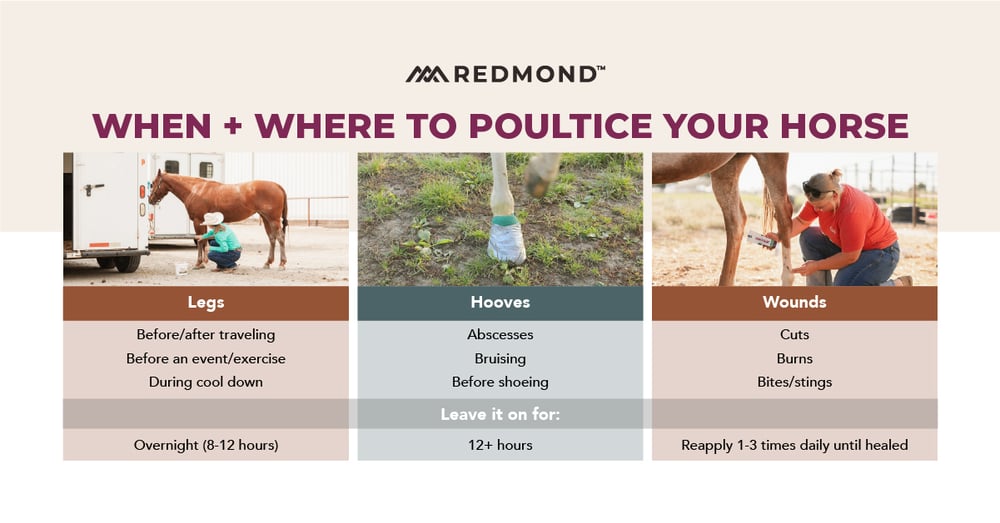
There’s no wrong time to poultice a horse—but there are situations when your horse will really benefit. Here are five Jennifer recommends:
- Trailering: Apply before and/or after hauling to ease leg stress and prevent stocking up.
- Before an Event: Apply the night before for tight, ready-to-perform legs.
- During Cool Down: To draw heat and swelling and speed recovery.
- Hoof Abscesses: Pack poultice into the hoof to draw out infection, debris, and relieve soreness.
- Before Shoeing: Pack hooves overnight to soften them and make farrier work easier.
Poultices are also beneficial on wounds—but check ingredients before applying. Cooling agents and some essential oils may not be appropriate for wounds. A simple clay poultice can help soothe and heal:
- Cuts
- Bites
- Stings
- Burns
- Skin irritations
Q. Do you need to use wraps with a leg poultice?
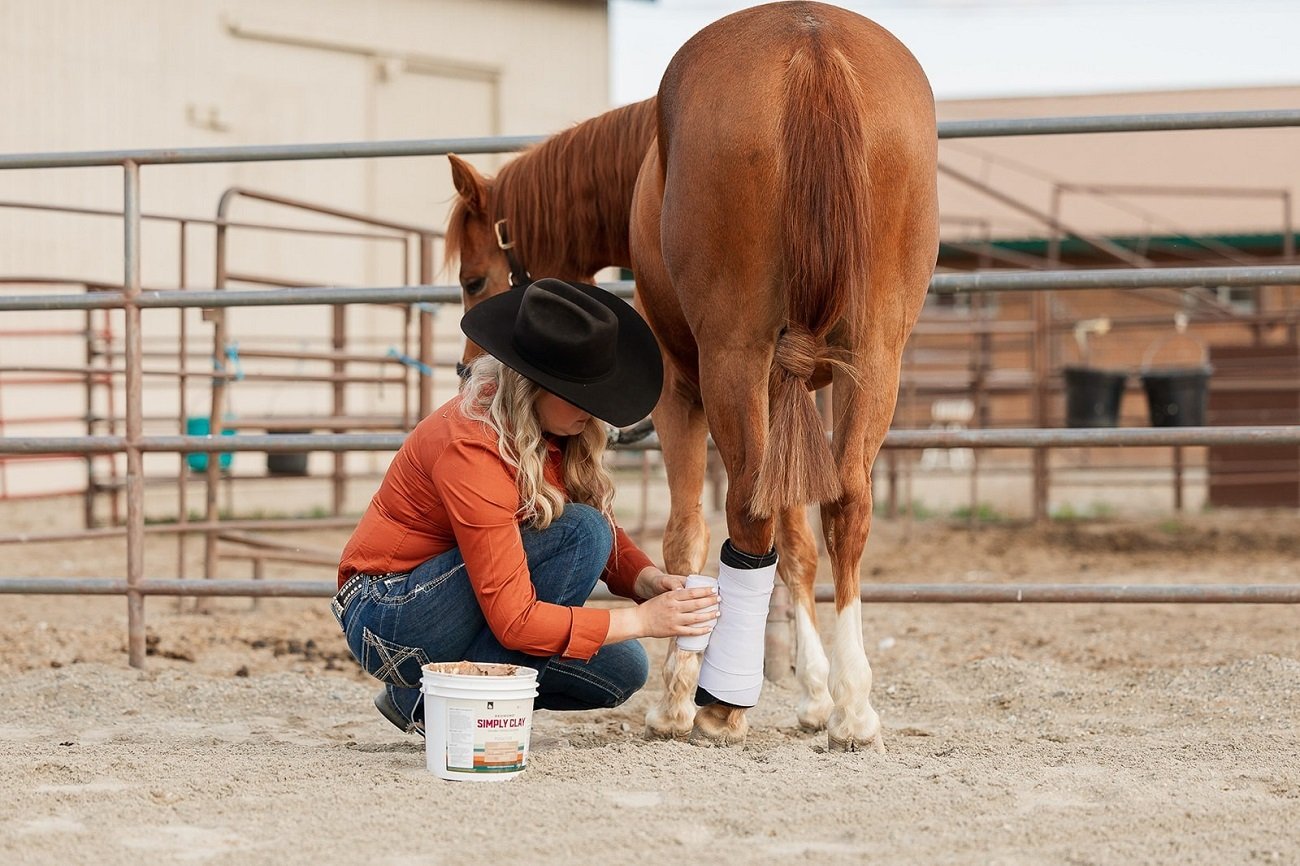
Most poultices work well with or without wraps—but wrapping can maximize results. Just make sure your poultice is safe to use under wraps before pulling out the polos.
Here are Jennifer’s preferred methods when poulticing her horses’ legs:
- For everyday use: Cover the poulticed area with plastic wrap to keep it moist, and finish with a quilt or polo wrap.
- For more intensive treatment: Wrap the poulticed area with dampened brown paper, then add a quilt or polo wrap to finish.
“Some people say using a brown paper bag is an old wives’ tale,” she said, “but it really helps draw out more swelling and heat. You can see a huge difference in the tendons if you wrap the poultice in a soaked brown paper bag.”
Q. How long should you leave a poultice on a horse?
Poultice products vary, so check the instructions for use. But generally, these guidelines apply:
- Leg poultices: Leave on overnight (8–12 hours)
- Hoof packs: Leave for 12+ hours
- Wound poultices: Reapply 1–3 times daily until healed
Support Natural Recovery with Simply Clay
Poultices are a trusted essential every rider should have in their toolkit—and Redmond has your horse covered from head to hoof.
- Simply Clay Poultice is made with hydrated Redmond bentonite clay, Redmond mineral salt, and essential oils. It’s a powerful drawing clay that rejuvenates swollen legs and sore muscles—and it’s safe to use under wraps.
- Simply Clay Salve is made with just hydrated Redmond bentonite clay. It’s gentle on wounds and supports clean, natural healing to help your horse feel better faster.

Support your horse’s comfort, recovery, and long-term soundness with natural, bentonite clay-based Redmond Simply Clay.


Learn More
- Simply Clay is also effective at treating splints in horses. Read Alyssa's story here.
© Redmond Equine 2025. All rights reserved.